Mexico’s recent decision to raise tariffs on imports from countries without free trade agreements, including China, could significantly alter the country’s foreign trade dynamics, according to the Mexico City Chamber of Commerce (Canaco CDMX).
José Gerardo Tajonar Castro, the organization’s vice president for foreign trade, said the measure should be viewed as part of a broader regional strategy rather than a purely fiscal adjustment. He noted that Mexico’s economic integration with the United States and Canada increasingly shapes its trade policy decisions.
For decades, many businesses relied on low-cost Asian inputs to support short-term profitability, a model that, while efficient initially, left domestic supply chains vulnerable and highly dependent on external sources, he explained.
Recent geopolitical developments and changes in fiscal policy have placed new constraints on that model. In response, Mexico’s Congress approved tariff increases ranging from 35% to 50% on more than 1,400 tariff lines covering products from countries without trade agreements, such as China, South Korea, India, Russia, Thailand and Turkey.
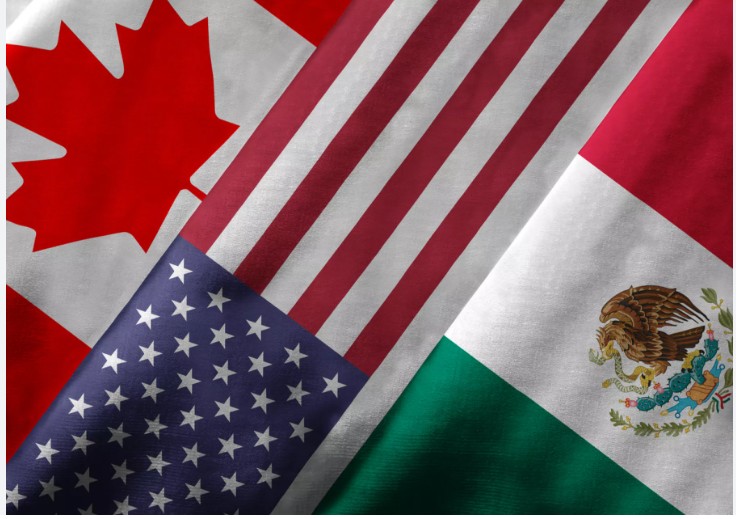
From the chamber’s perspective, the move is not an isolated protectionist action but rather a policy aligned with similar measures in the United States and Canada, particularly as the three countries prepare for the 2026 review of the United States-Mexico-Canada Agreement (USMCA).
One of the key drivers behind the policy, Tajonar Castro said, is addressing concerns about the transshipment of Asian goods into North America through Mexico. Higher tariffs on sectors such as steel, aluminum, textiles and manufactured goods aim to curb practices that have undermined domestic production.
Rising logistics and tariff costs have become a structural barrier rather than a temporary challenge for Asian imports. As a result, companies whose competitiveness depends solely on low-cost imported inputs are finding it increasingly difficult to operate under current market conditions.
This shift creates opportunities for domestic manufacturers, though it also highlights the need for significant industrial transformation. Small and medium-sized enterprises, in particular, will require technological upgrades and access to financing to fill emerging supply gaps.
According to the business leader, major industries such as automotive manufacturing, home appliances and aerospace are now placing greater emphasis on regional origin rather than price alone. Compliance with rules of origin has become essential to maintain preferential access to the North American market.
He cautioned that tariff increases implemented without a supporting industrial policy could lead to inflationary pressures. However, with the right framework in place, trade barriers could serve as a tool to strengthen Mexico’s manufacturing base and deepen its integration into regional supply chains.
Source: Forbes México